What Expenses Should You Track in a Business? (A Guide for Small Business Owners)

Most business owners don’t struggle because they aren’t making money.
They struggle because they don’t fully understand where their money is going.
Revenue is easy to see. You send invoices, receive payments, and watch your top line grow. But expenses are different. They happen constantly, often in small amounts, and across multiple areas of your business. If they aren’t tracked properly, they become invisible.
And invisible expenses are what quietly destroy profit.
This is why understanding what expenses to track—and how to track them—is one of the most important things you can do as a business owner.
Why Expense Tracking Matters More Than You Think
At a high level, expense tracking seems simple. You record what you spend and subtract it from your revenue.
But the reality is much more complex.
Expenses don’t just tell you how much you’re spending. They tell you:
- Where your money is going
- Which parts of your business are efficient
- Which areas are costing you profit
Without proper tracking, you lose that visibility.
You might feel like your business is doing well, but your margins could be shrinking due to costs you aren’t paying attention to.
If you don’t track your expenses properly, you’re not managing your business—you’re reacting to it.
The Two Types of Expenses You Must Understand
Before diving into specific categories, it’s important to understand the two main types of expenses in any business:
1. Direct (Project-Based) Expenses
These are costs tied directly to a job, project, or client.
Examples:
- Materials
- Labor
- Subcontractors
- Equipment usage
These expenses determine whether a specific job is profitable.
2. Indirect (Overhead) Expenses
These are costs required to run your business but not tied to a specific project.
Examples:
- Software subscriptions
- Office rent
- Insurance
- Administrative costs
These expenses determine your overall business profitability.
Most businesses track overhead fairly well. Where they struggle is with direct, project-based expenses.
And that’s where profit is usually lost.
The Essential Expense Categories Every Business Should Track
To gain full visibility, you need a structured system. At a minimum, you should be tracking the following categories:
Labor
Labor is often the largest expense in any project-based business.
This includes:
- Wages
- Payroll taxes
- Benefits
- Overtime
Labor costs can fluctuate significantly, so tracking them accurately is critical.
Materials
Materials are another major cost driver.
These include:
- Raw materials
- Supplies
- Consumables
Material costs often increase over time, and small overruns can add up quickly.
Subcontractors
If you work with subcontractors, their costs must be tracked per project.
Without this, it’s impossible to know whether outsourced work is helping or hurting your margins.
Equipment
Equipment costs include:
- Rentals
- Maintenance
- Fuel
- Depreciation
Even if you own your equipment, it still represents a cost.
Software and Tools
Modern businesses rely on software to operate.
These costs include:
- Project management tools
- Accounting software
- Communication platforms
While these are typically overhead, they still impact profitability.
Marketing and Sales
Customer acquisition is not free.
You should track:
- Advertising spend
- Website costs
- Lead generation tools
This helps you understand your cost to acquire customers.
Administrative Costs
These include:
- Office supplies
- Utilities
- Salaries for admin staff
While they don’t tie directly to projects, they still affect your bottom line.
Taxes and Fees
Taxes are often overlooked until they become a problem.
Track:
- Sales tax
- Business taxes
- Transaction fees
This ensures you’re not surprised later.
The Biggest Mistake: Tracking Expenses at the Wrong Level
Most businesses track expenses at a high level.
They know total costs, but they don’t break them down by project.
This is a major problem.
Without project-level tracking:
- You don’t know which jobs are profitable
- You can’t identify cost overruns
- You can’t improve future estimates
Knowing your total expenses is not enough—you need to know where they come from.
Why Timing Matters
Another common mistake is tracking expenses too late.
Many businesses:
- Enter expenses weekly
- Update spreadsheets after the job
- Review reports monthly
This delay creates gaps in your data.
By the time you identify a problem, it’s already too late to fix it.
Instead, expenses should be tracked in real time.
- Record costs as they happen
- Update labor daily
- Capture unexpected expenses immediately
Real-time tracking turns expense data into a decision-making tool.
Why Spreadsheets Fall Short
Spreadsheets are often the default solution.
They’re flexible and easy to start with.
But as your business grows:
- Data becomes outdated
- Updates are inconsistent
- Visibility is lost
Spreadsheets require manual effort, and that effort breaks down under real-world conditions.
Spreadsheets track information—but they don’t give you control.
How WorkBalance Solves This Problem
This is exactly where WorkBalance comes in.
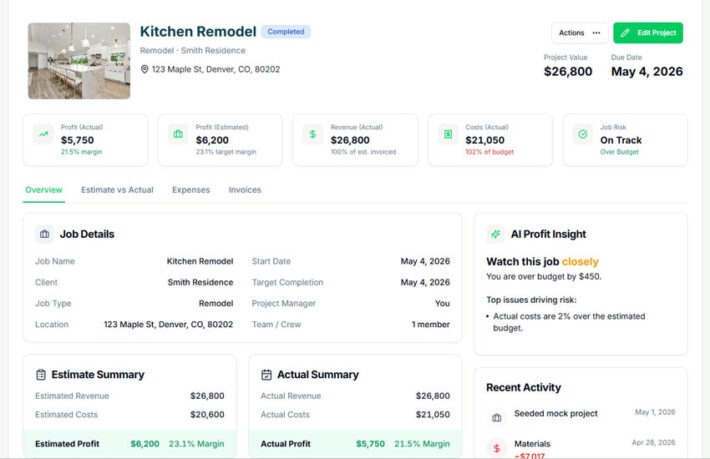
Instead of separating projects, tasks, and expenses across different tools, WorkBalance connects everything in one system.
With WorkBalance, you can:
- Track expenses per project in real time
- Categorize costs automatically
- Monitor budgets as work progresses
- See profit before the project is complete
This eliminates the friction that causes most expense tracking systems to fail.
Expense tracking becomes part of your workflow, not something you have to remember to do.
What Happens When You Track the Right Expenses
When you track the right expenses properly, your business changes.
You gain:
- Clear visibility into your costs
- Better control over budgets
- More accurate pricing
- Consistent profitability
You stop guessing and start making informed decisions.
Final Thought
Tracking expenses isn’t just about staying organized.
It’s about understanding your business at a deeper level.
Without it, you’re operating on assumptions. With it, you gain clarity and control.
If you want to improve your profit, start by improving what you track.
Take Control of Your ExpensesWorkBalance helps you:
- Track all business expenses in one place
- Connect costs directly to projects
- See exactly where your profit comes from
Because knowing your numbers isn’t enough—you need to use them.